
Episode 4 · February 9, 2026
Building the Workforce of 2050
Jennifer Wright examines the training, collaboration, and workforce capacity required for people to adopt—and benefit from—automation, AI, robotics, and digital systems.
 The Future Herd
Seven Future Herd conversations on artificial intelligence, farm data, and the human judgment that has to remain at the centre.
These episodes approach AI as a practical and political question for Canadian agriculture: who governs the data, where computation happens, what producers can decide for themselves, and how technology can serve animal welfare, ecological resilience, and field knowledge rather than replace it.
Start anywhere, or follow the sequence from workforce readiness and crop research through to farm infrastructure and livestock systems.
Episode 4 · February 9, 2026
Jennifer Wright examines the training, collaboration, and workforce capacity required for people to adopt—and benefit from—automation, AI, robotics, and digital systems.
Episode 18 · April 24, 2026
Dr. Mohsen Yoosefzadeh Najafabadi connects machine learning, drone imaging, genetics, and digital twins to climate-resilient crop development.
Episode 21 · May 1, 2026
Mohamad Yaghi considers AI and digital tools as farmer-centred operational support for risk management, knowledge transfer, and independent decision-making.
Episode 27 · May 26, 2026
Donald Killorn situates AI within a wider leadership challenge: reading complex systems and navigating climate, trade, and data-intensive technological change.
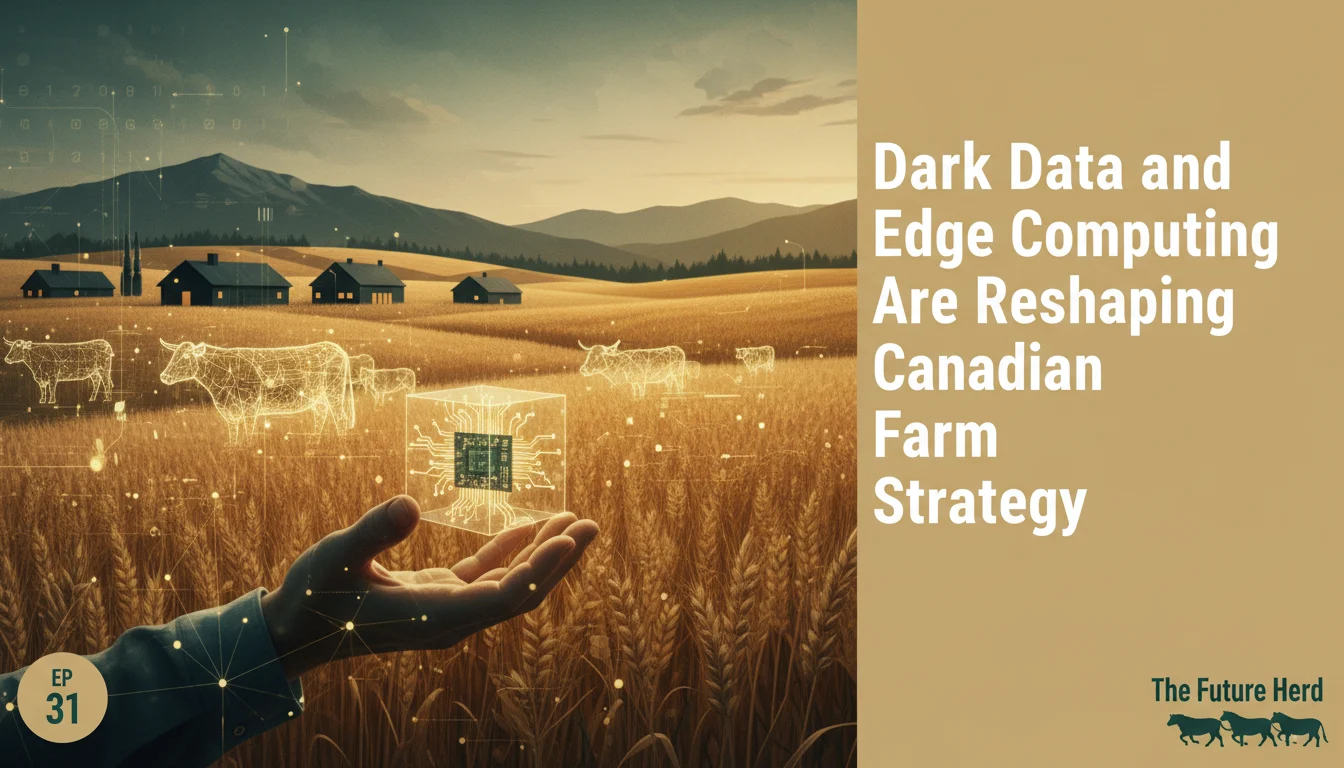
Episode 31 · June 24, 2026
A strategic briefing on AI model training, data sovereignty, edge computing, interoperability, energy use, and the choices that keep farm data under producer control.
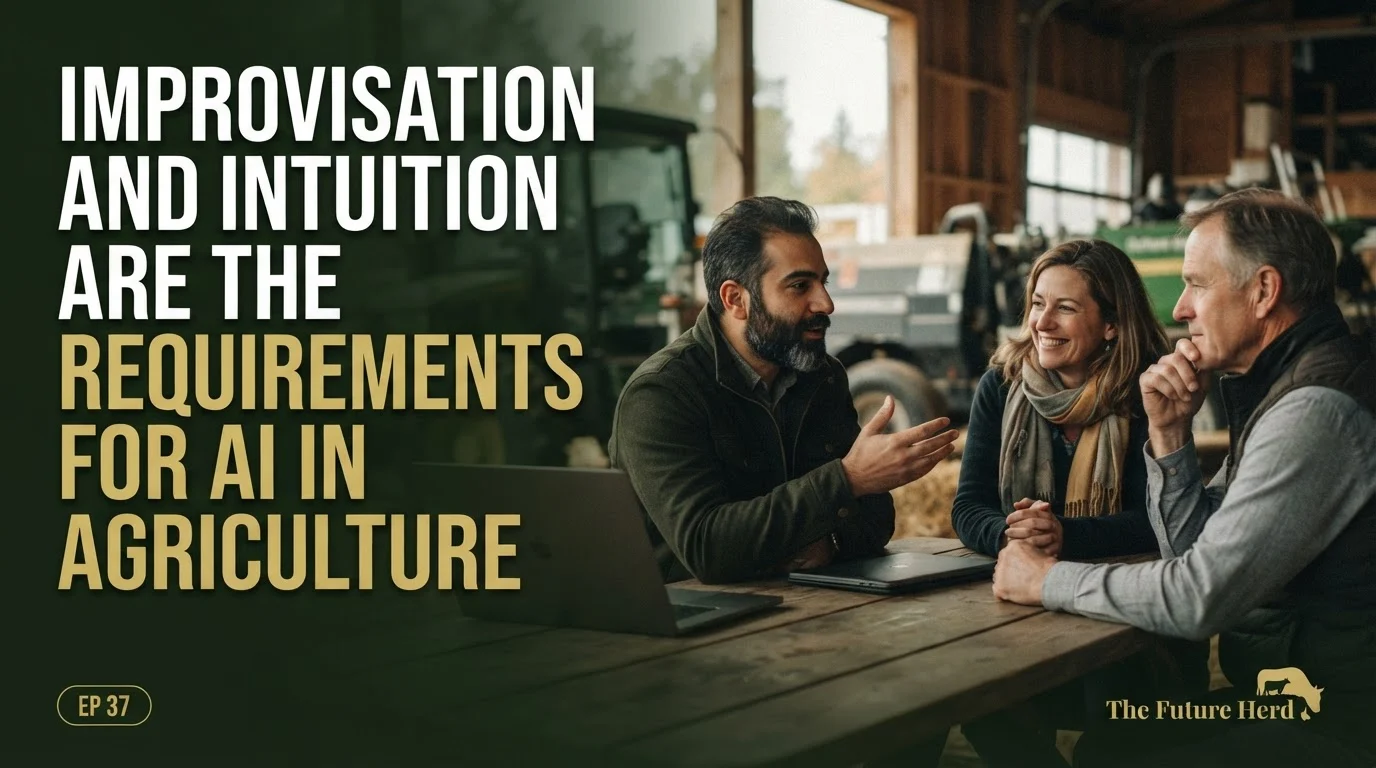
Episode 37 · August 7, 2026
Donald Killorn, Mohsen Yoosefzadeh Najafabadi, and Jennifer MacTavish explore AI as support for field-level judgment—not a substitute for it—alongside LLMs, hallucination, governance, and environmental costs.
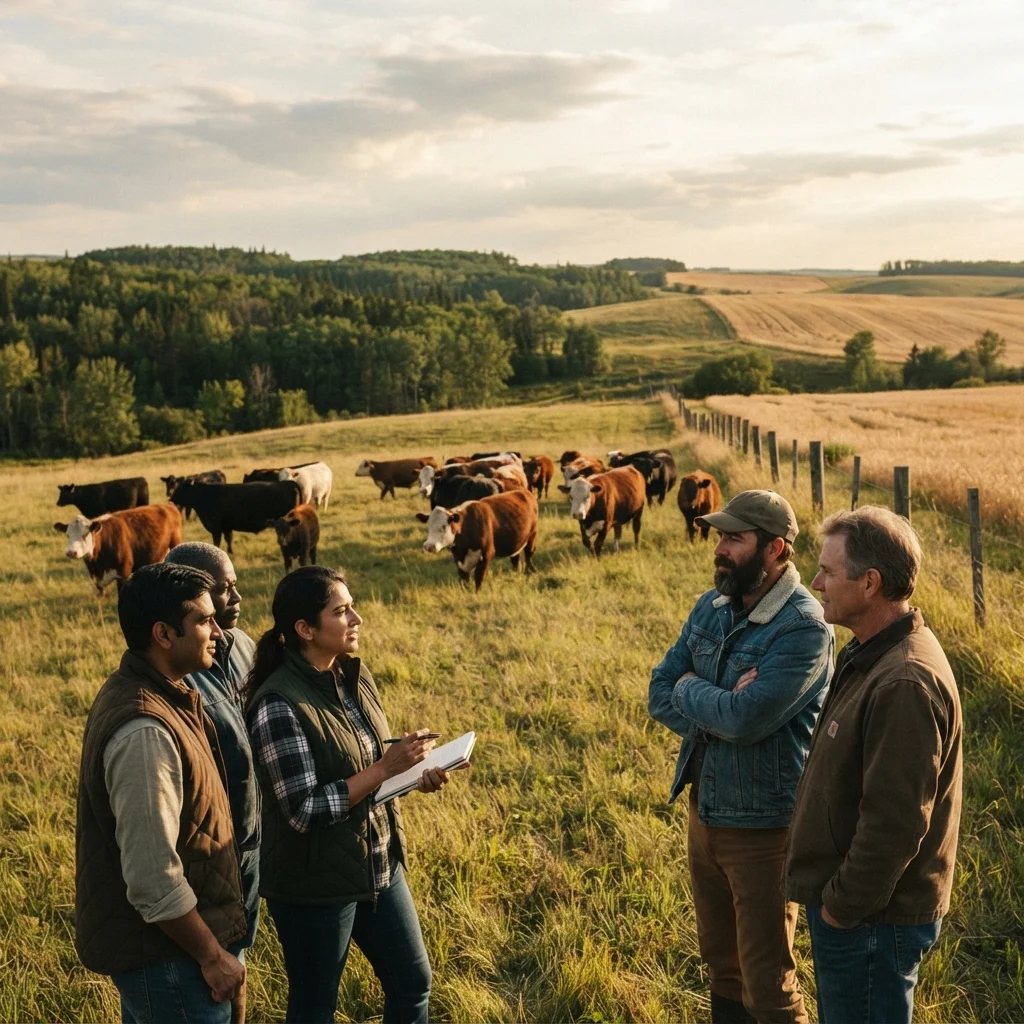
Episode 39 · August 25, 2026
Dr. Suresh Neethirajan on AI, bioacoustics, computer vision, and digital twins for animal welfare, resilient livestock systems, and producer autonomy.
Across these conversations, the recurring question is not whether AI will arrive on farms. It is whether Canadian agricultural institutions and producers will have the skills, infrastructure, governance, and freedom to shape how it does.