The Future Herd is a Canadian agri-food media and intelligence project about how people lead, adapt, and make decisions together in a changing food system.
What began as a podcast has grown into a living public archive: long-form conversations with sector leaders, practical knowledge briefs drawn from those conversations, curated intelligence on current agri-food signals, and narrative threads that connect emerging issues across episodes, policy, research, technology, and community life.
The project is grounded in a simple premise: the future of food and agriculture will not be shaped by one institution, one technology, or one policy lever. It will be shaped by many people working under different constraints, learning from each other, and finding ways to coordinate without pretending the system is simple.
What The Future Herd does
The Future Herd creates space for serious, accessible public thinking about Canada’s agri-food future. Each episode is a working conversation rather than a scripted interview. Guests are invited to reason in public — connecting immediate pressures to longer-term questions about resilience, food security, labour, technology, ecological health, infrastructure, and governance.
- We focus on real-world constraints, not abstract predictions.
- We treat uncertainty as something to work with, not something to eliminate.
- We connect leadership conversations to practical sector intelligence.
- We build durable public knowledge from each exchange.
The result is a growing record of how Canadian agri-food leaders, researchers, producers, policymakers, organizers, and communities are making sense of change while it is still unfolding.
From podcast to public knowledge platform
The podcast remains the centre of the project. But The Future Herd has become more than a show.
The episode archive now holds dozens of conversations with people working across agriculture, food security, research, technology, policy, rural development, public health, and community food systems. The Knowledge library turns those conversations into standalone briefs and field notes that can be used by leaders, educators, organizations, and students. The Intelligence section tracks current signals from across the Canadian agri-food landscape. The Threads layer connects recurring storylines across episodes, knowledge articles, and intelligence briefs.
Together, these layers make The Future Herd a public memory system for the sector: a way to follow not just individual interviews, but the larger patterns emerging across conversations.
Why “The Future Herd”
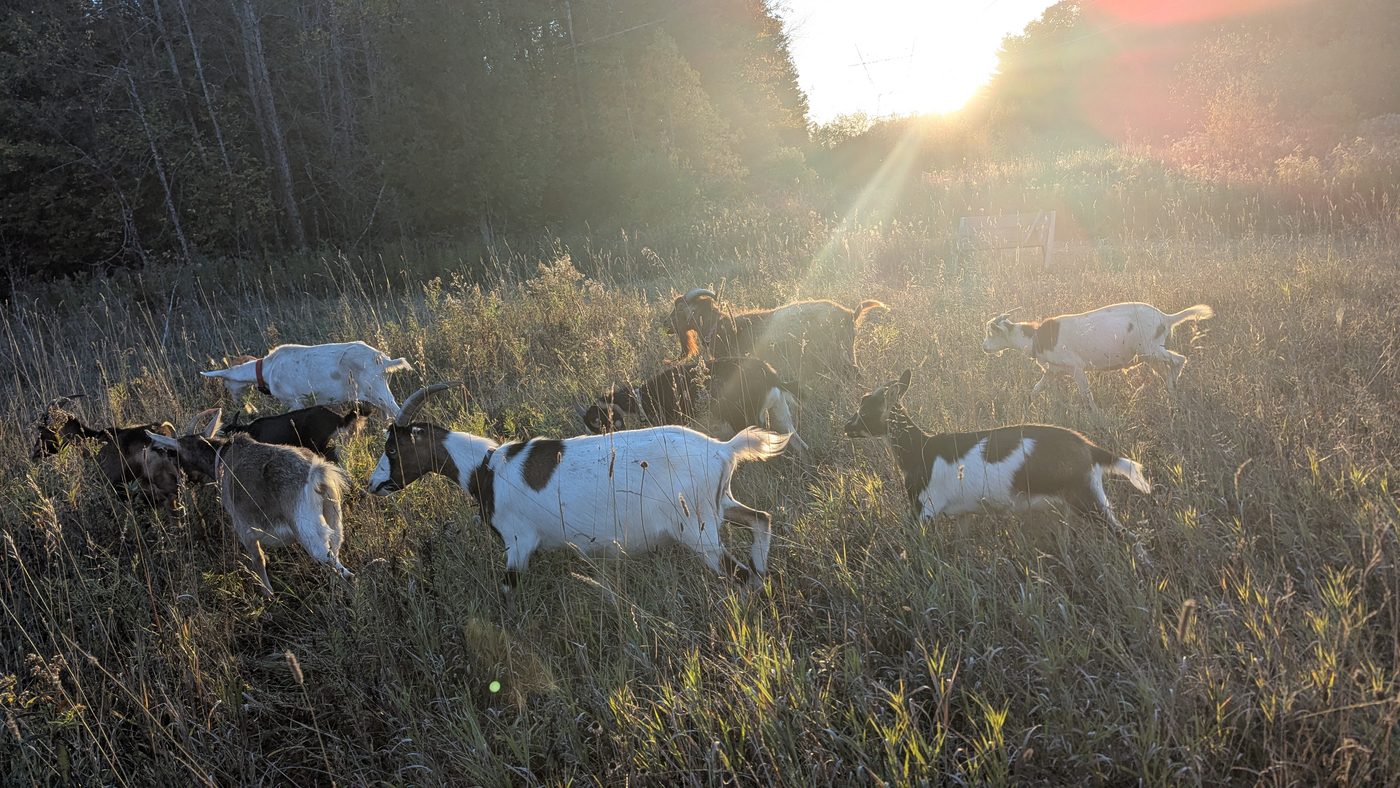
The name comes from a familiar dynamic in pastoral agriculture: a herd made up of many independent actors, coordinated through movement, attention, trust, and light-touch leadership rather than command and control.
Food systems work the same way. Farmers, processors, researchers, policymakers, distributors, workers, eaters, investors, and communities all move according to different incentives and constraints. Alignment is rarely total, and progress is rarely linear.
The Future Herd is interested in how coordination actually happens in these conditions — how leadership emerges at the edges, how trust is built through practice, and how shared direction forms without requiring uniformity.
Why 2050
2050 is not a prediction target. It is a horizon that forces long-term thinking.
Decisions made today — about land use, infrastructure, research priorities, labour, technology, trade, water, food access, public trust, and ecological limits — will shape what food systems can support decades from now. Looking ahead creates space for better questions: not only what is efficient now, but what remains viable over time.
The show is closely connected to the Agri-Food 2050 process led by the Agricultural Adaptation Council, which uses foresight and collaboration to help the sector prepare for long-term change.
Hosts
Jesse Hirsh is a researcher, futurist, farmer, and media producer working at the intersection of technology, agriculture, and public dialogue.
His work spans practical farming, open-source technology, public speaking, and strategic research across the agri-food sector. On The Future Herd, Jesse brings a systems lens to each conversation — helping guests connect immediate operational realities to deeper questions about power, authority, adaptation, and collaboration.
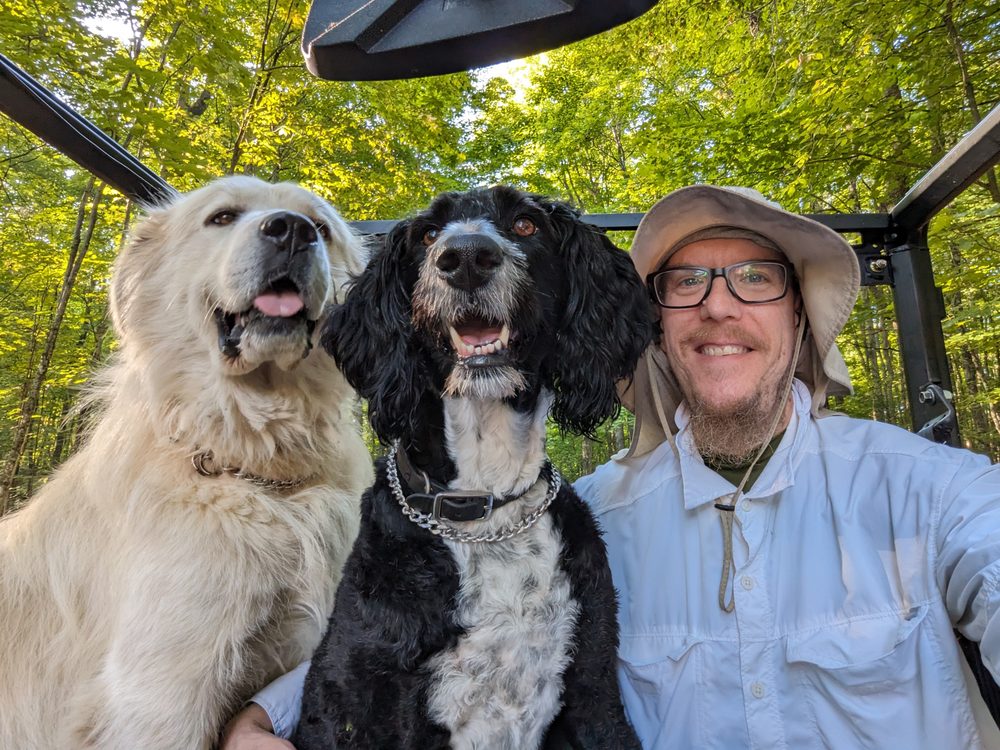
Jenn MacTavish is the Interim Executive Director of the Agricultural Adaptation Council and a co-host of The Future Herd.
Jenn brings deep experience in agricultural leadership, organizational development, and sector convening. Her perspective is grounded in the practical work of helping people and institutions adapt: building relationships, supporting emerging leaders, asking better questions, and creating the conditions for collaboration across a complex agri-food ecosystem.
Her conversations on The Future Herd have explored mentorship, talent retention, food-system measurement, resilience, infrastructure, artificial intelligence, and the organizational cultures needed to turn uncertainty into shared learning. As co-host, Jenn helps connect the show’s long-range questions to the real institutions, people, and implementation challenges shaping Canada’s agri-food future.

The Commons
The Future Herd is also the starting point for something larger: open participation infrastructure for food-system decisions.
The Commons is an early-stage pilot — a structured space for producers, eaters, workers, policy people, and the broader public to submit perspectives, respond to each other, and map where common ground exists on the questions that shape the food system.
It draws on established tools for participatory governance and opinion mapping, extended with an AI agent layer and a peer-driven trust system. The goal is to discover statements that can hold the centre: ideas that participants across groups can recognize, support, and potentially act on together.
The first topic is food security. No institutional affiliation is required to participate. → commons.thefutureherd.ca
How to engage
You can listen to episodes directly on the site, follow the show on your preferred podcast platform, read the knowledge briefs, track the intelligence archive, or participate in The Commons pilot.