56: Food Versus Fuel Is A False Choice For Canola
Episode 56 · November 27, 2026
Dean Roberts joins Jesse Hirsh to make the case that Canadians should take far more pride in canola — a homegrown crop that is now the number one source of on-farm revenue for Western Canadian farms. He traces how domestic crush capacity and biofuel demand are adding real value at the farm gate, while arguing that regulatory uncertainty, meal logistics, and rising fertilizer costs are the pressures shaping the sector's next chapter. It's a story of profitable farms funding continuous innovation, and of a commodity connecting prairie growers to food, feed, and energy markets worldwide.
Overview
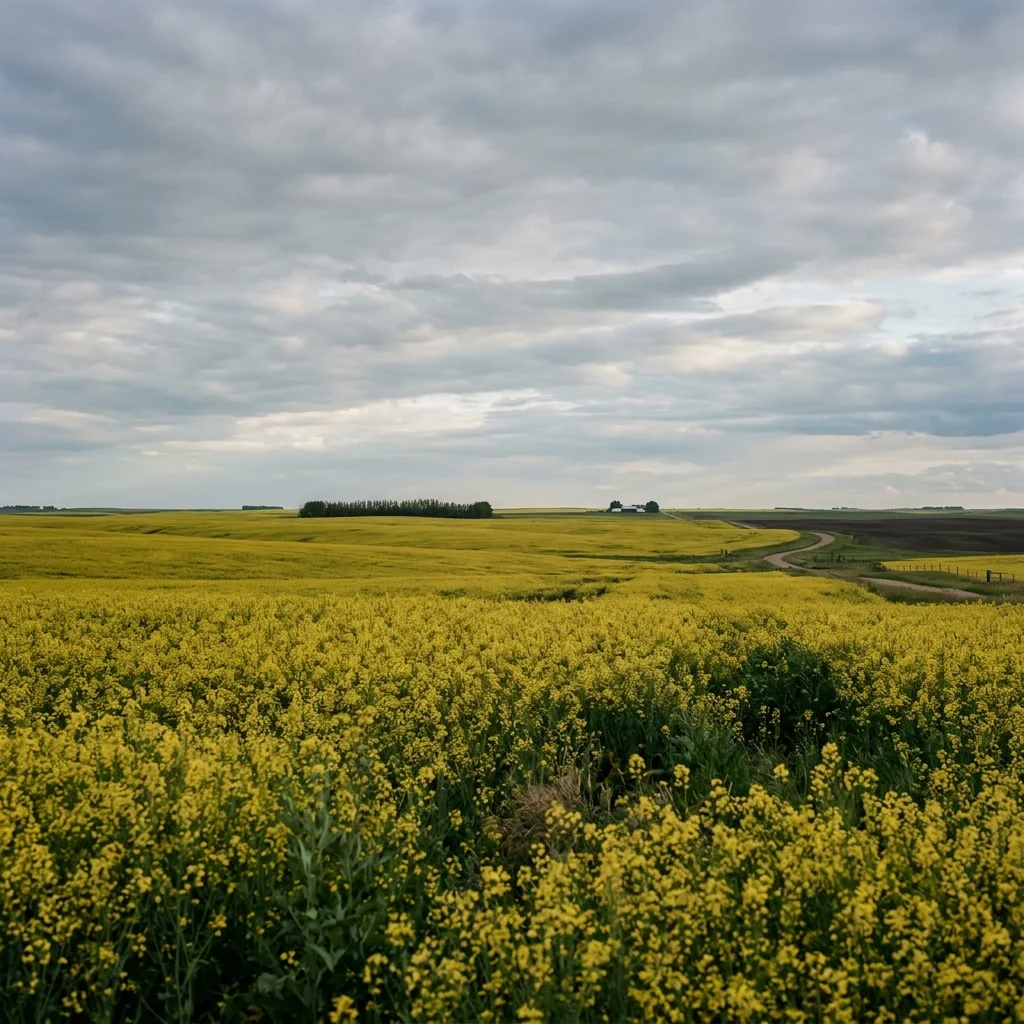
Dean Roberts is a Saskatchewan farmer, an engineering graduate who came home to the land, and a long-serving leader in producer groups who found his way into policy. On this episode of The Future Herd, Jesse Hirsh asks him to make the case for canola and oilseeds — arguing Canadians should have far more pride in these commodities — and Dean's answer is that canola is the number one source of on-farm revenue for Western Canadian farms.
Dean walks through canola as a genuinely Canadian innovation: researchers like Keith Downey and Bald Stinson bred out glucosinolates and improved the oil profile to make it shelf stable and palatable, then herbicide tolerance arrived to keep fields clean. Today 44,000 canola farmers are backed by an industry supporting 192,000 jobs and roughly $44 billion in economic impact. The newest win is domestic crush build-out — Canada can now crush about 75% of a production year's crop, worth roughly 62 cents a bushel at the farm gate.
The boom is being driven by biofuel demand: about one in three canola acres now feeds fuel markets, and renewable diesel is a true drop-in replacement that works in a Saskatchewan winter, unlike older biodiesel blends. But Dean is candid about the tensions. Regulatory and trade uncertainty is freezing capital, the Stratcona-scale plants imply huge meal byproduct volumes that don't ship like raw seed, and he wrestles daily with fertilizer prices — under-fertilize hilltops and sacrifice profit, spend fully and gamble on rain.
Listeners come away with Dean's blue-sky policy list: trade agreements, trade-enabling rail and port infrastructure (about 80% of canola moves through the West Coast), a research framework that keeps innovation moving, and business risk management so farms can take the next leap. Add in his point that profitability is what funded direct seeding and soil health gains, and it's clear why canola matters: it's a rare commodity spanning food, feed, and energy, and a template for how Canada's agri-food sector can prosper.
Key themes
- canola
- oilseeds
- biofuels
- crush capacity
- farm gate economics
- trade infrastructure