Value Chain Collaboration is Essential for Scaling Agricultural Byproduct Recovery
Treating food loss as an inevitable cost of doing business masks the operational disconnects that prevent secondary streams from becoming viable commercial ingredients.
Published October 14, 2026
The contemporary discourse on food waste often directs its gaze toward the end of the supply chain. Consumers staring into domestic refrigerators or retailers managing cosmetic standards routinely bear the cultural blame for surplus organics. Yet applied research within the horticultural sector reveals a different structural reality: the vast majority of organic loss occurs long before retail shelves are reached, embedded within the complex mechanics of food manufacturing and agricultural grading. Addressing this upstream volume requires more than individual corporate goodwill; it demands an intentional reconfiguration of commercial relationships across the entire value chain.
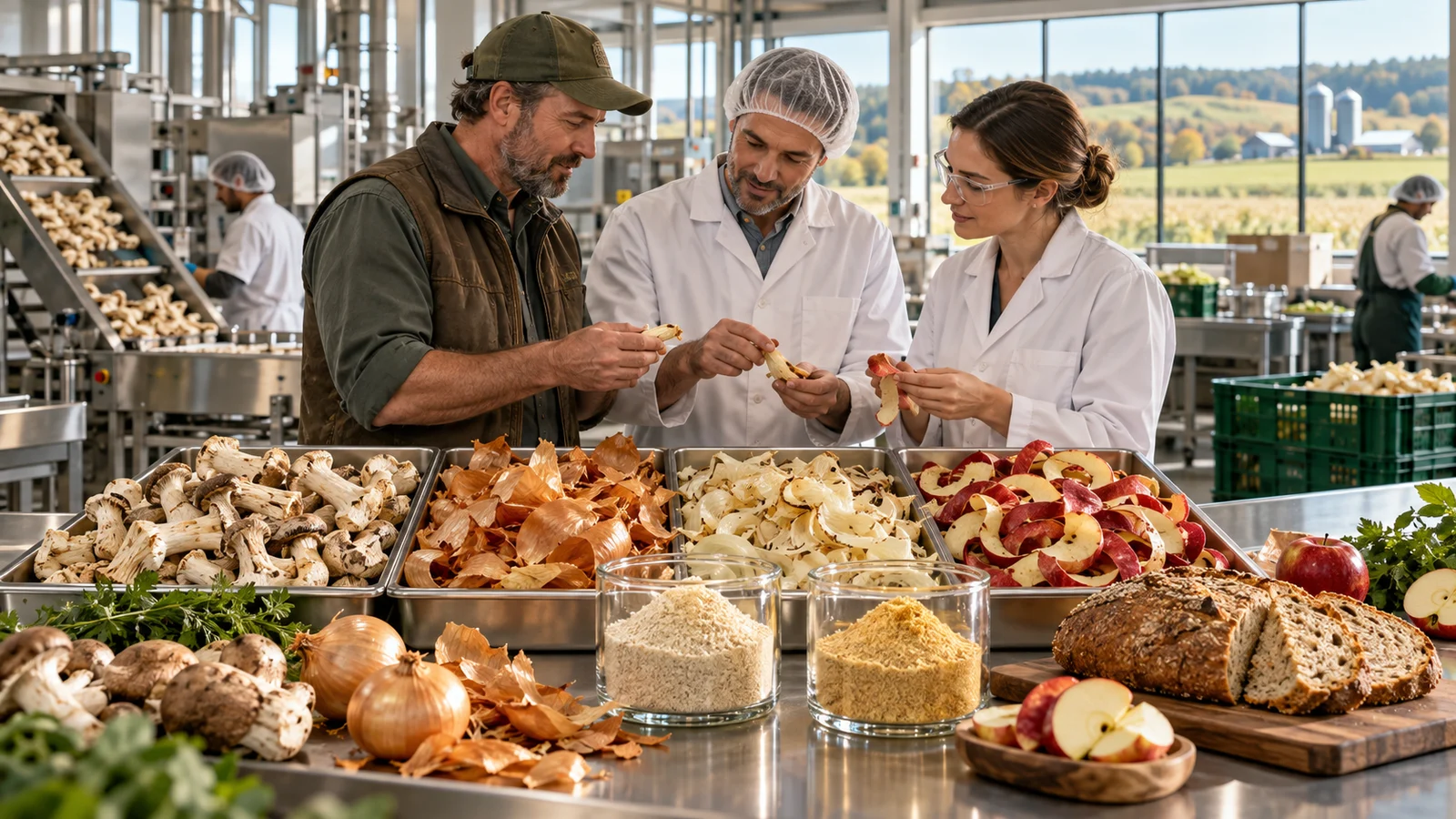
At the heart of the scaling challenge is a fundamental tension between scale and integration. When a food manufacturer or primary producer considers the recovery of secondary streams—such as mushroom stems, onion processing remnants, or horticultural peels—they frequently encounter a significant logistical barrier. Startups and innovators developing novel upcycled ingredients often operate at a pilot scale, handling perhaps a single metric ton of material. Meanwhile, commercial-scale processors generate volumes in the thousands of tons annually. This severe mismatch in operational capacity makes it economically unviable for large-scale operators to modify established production lines or alter their handling protocols for a partner unable to absorb their output. Bridging this gap requires specialized matchmaking and market intelligence to align the volumetric reality of primary production with the processing capacity of ingredient innovators.
Furthermore, the recovery of agricultural byproducts forces companies to operate well outside their traditional spheres of influence. A business structured to market consumer-packaged goods through established retail channels discovers that converting a processing byproduct into a viable commercial ingredient means building an entirely new supply chain from scratch. Rather than developing an internal side-hustle to valorize waste—an endeavor fraught with unfamiliar regulatory, processing, and distribution hurdles—many mainstream producers find greater success by acting as upstream suppliers to dedicated upcycling enterprises. This division of labor allows primary producers to focus on their core competencies while handing off secondary streams to entities specifically engineered to process, formulate, and market valorized ingredients.
Yet, technical and logistical integration is only half the equation; market adoption ultimately hinges on consumer perception and product performance. The commercial success of any upcycled ingredient relies first on traditional metrics of price and functionality. An innovative mushroom-derived fiber or fruit-based additive cannot rely on the "upcycled" designation as its primary selling feature; the label functions merely as a cherry on top of a product that must already deliver superior preservation, texture, or flavor. Consumer research further complicates this dynamic by revealing a persistent psychological paradox. While buyers increasingly appreciate the sustainability benefits of resource efficiency, framing products around the language of "waste" triggers anxieties regarding food safety, particularly when purchasing for vulnerable household members. Consequently, successful commercialization often repositions upcycled goods through the lens of frugality and sensible resource stewardship rather than deficit reduction.
Overcoming these barriers requires systemic shifts in how the agri-food sector conceptualizes its own operations. As demonstrated by facilities where valuable, nutrient-dense peels are inadvertently funneled into the same conveyor belts as mud and debris, material only becomes waste when systems fail to preserve its intrinsic value. Reengineering these operational touchpoints—diverting secondary grades before they encounter non-food-grade sorting bins—demands a paradigm shift across the primary production and manufacturing landscape. Ultimately, scaling byproduct recovery across the Canadian bio-economy will depend on targeted support structures, such as coordinated matchmaking platforms and regional innovation networks, that transform isolated pockets of agricultural surplus into integrated, economically resilient supply chains.
Related Episode
Themes
- Unavoidable Agricultural Waste
- Supply Chain Mismatch
- Consumer Perception of Frugality
- Systemic Food Loss