Agriculture Redefines AI as a Tool for Intuition and Improvisation Rather Than Control
By embedding computation within rigorous governance frameworks and human-centered design, the agri-food sector is proving that artificial intelligence can serve the art of farming rather than dictate it.
Published August 7, 2026
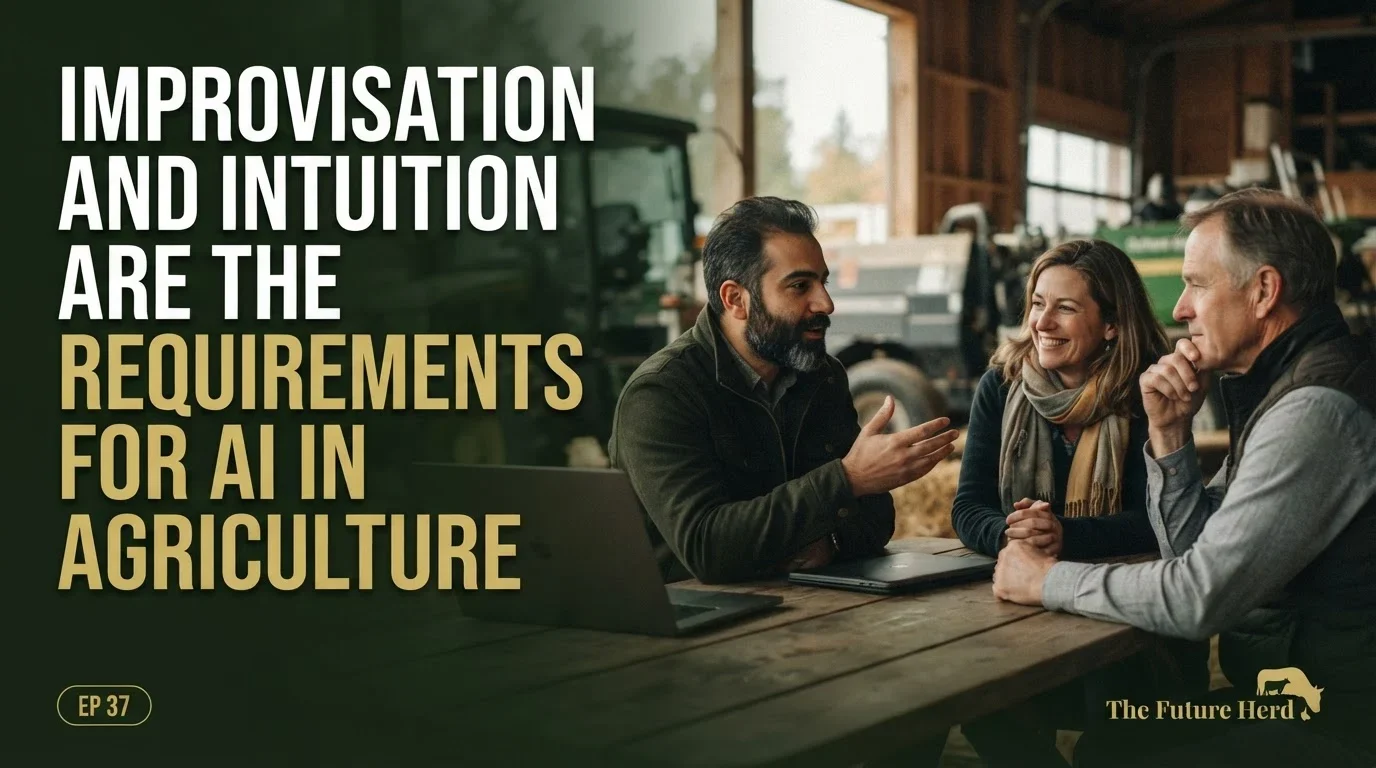
Popular technology discourse often frames artificial intelligence as an instrument of absolute control. In this pervasive narrative, algorithmic systems ingest vast troves of data to eliminate friction, automate decisions, and impose a rigid, centralized order upon complex domains. Yet the agri-food sector—operating at the intersection of unpredictable weather, volatile biological systems, and living markets—rejects this premise entirely. Farming and food production remain perhaps the last true frontiers of human freedom and improvisation, environments where no amount of computational power can fully script reality. Consequently, when artificial intelligence finds meaningful application in agriculture, it is rarely deployed to take over decision-making. Instead, it is constrained, framed, and redesigned to support intuition, enhance adaptability, and facilitate the nuanced judgment of the practitioner.
This dynamic reveals a fundamental paradox at the heart of modern ag-tech: the more advanced the computation, the more critical the human element becomes. For researchers like computational biologist Mohsen YN and practitioners like Donald, who leads agricultural initiatives in Prince Edward Island, the day-to-day reality of implementing AI is worlds away from blue-sky theoretical speculation. While deep-learning models and large language models offer breathtaking capabilities, their raw outputs are inherently slippery. Hallucinations, data leakage, and the compounding unreliability of automated inferences present acute hazards in fields where a single miscalculation can jeopardize a season’s yield or compromise a farm’s livelihood. Rather than surrendering to these black-box systems, agricultural innovators are building deliberate architectural barriers—what Donald terms "harnesses"—to govern how data enters and leaves the farm. These protective layers act as digital sentinels, ensuring that powerful models serve local needs without exposing proprietary or sensitive farm data to the vulnerabilities of the wider cloud.
Crucially, this resistance to uncritical automation extends to how artificial intelligence is experienced on the ground. Farmers are not interested in interacting with opaque software that issues flat, uncontextualized commands. Adoption hinges entirely on trust, and trust is built when technology behaves less like an authoritative director and more like a conversational partner. When an AI system suggests an intervention—such as variable-rate nitrogen application or disease mitigation—it must provide the underlying rationale, weaving together field history, local conditions, and historical patterns so the grower can weigh the recommendation against their own hard-earned expertise. By involving farmers directly in the training loops, sensory panels, and user-experience design, developers ensure that the technology honors the aesthetic and emotional realities of agricultural work. The interface must feel welcoming, elegant, and deeply human; otherwise, it will be swiftly discarded by an industry that values practical utility over technological novelty.
This insistence on governance and human agency takes on existential urgency when applied to the compounding pressures of climate volatility. As extreme weather events rewrite historical baselines, predictive models and digital twins are increasingly essential for anticipating future shocks. Yet this computational capability carries a steep environmental bill. Every query, every generative prompt, and every sprawling model run consumes tangible energy and resources. As Mohsen points out, society has fallen into a careless habit of deploying massive computational sports cars to run trivial errands, treating tokens as an infinite resource while ignoring the cumulative ecological cost of digital excess. The path forward demands a radical efficiency: treating AI not as a blunt instrument to be applied to every administrative task, but as a specialized, high-value tool reserved for complex, multi-variable challenges like breeding climate-resilient crop varieties or modeling long-term soil carbon dynamics.
Ultimately, the agri-food sector’s engagement with artificial intelligence offers a vital blueprint for society at large. Agriculture is forced by its very nature to reconcile the immense potential of frontier technology with the unyielding physical realities of the natural world. In doing so, it demonstrates that true leadership in the digital age does not lie in abdicating responsibility to algorithms, but in designing the rules, architectures, and cultural norms that keep humans firmly at the helm. By demanding transparency, prioritizing data sovereignty, and treating trust as the ultimate foundation of technical adoption, the agricultural community is redefining the terms of our technological future. AI does not make the farmer obsolete; rather, the realities of farming are forcing AI to become humble, disciplined, and responsive to the art of improvisation.
Related Episode
Themes
- Improvisation As An Agricultural Constraint
- The Architecture Of The AI Harness
- Trust As A Prerequisite For Technical Adoption
- Environmental Trade-Offs In Computational Agriculture