53: Making Commercial Kitchens Accessible and Available
Episode 53 · November 10, 2026
Justin Andrews joins Jesse Hirsh to argue that the commercial kitchens sitting empty in every city — church halls, closed cafés, community centres — are the missing entry point for people who want to start food businesses but can't afford a lease. Through Food Web Network, he's turning idle, permitted kitchens into rentable, bookable space, and making shared kitchens a normal part of how Canada's local food economy grows.
Overview
Justin Andrews joins Jesse Hirsh to talk about Food Web Network and a stubborn mismatch in the food system: aspiring food entrepreneurs need permitted commercial space one or two days a week, while cafés, churches, and community centres sit empty every evening. Jesse frames the central question around access as an on-ramp — how making commercial kitchens available lets newcomers enter the industry without sinking money into their own facility. Justin traces the idea to his own frustration selling baked goods at a Nova Scotia farmers market.
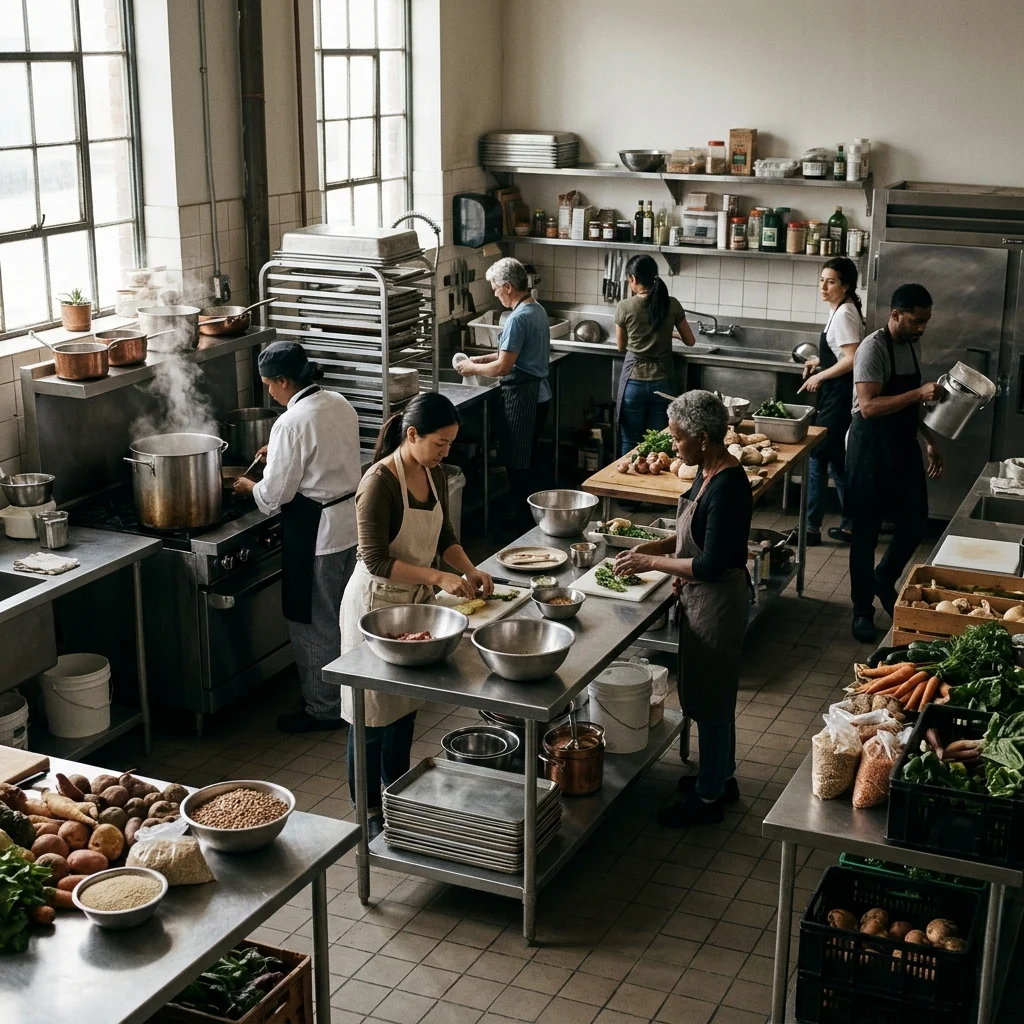
Justin argues that the word commercial misleads people. A commercial kitchen isn't an industrial stainless-steel facility — it simply holds a permit from the local health inspector, which means a pest control plan, fire marshal sign-off on ventilation, and a commercial dishwasher or three-compartment sink. Baking doesn't require commercial ventilation; deep frying does. Once you see that a church kitchen can qualify, the supply of usable space is far larger than assumed, and the barrier shifts from infrastructure to connection.
The harder problem is trust. Justin describes owners refusing to rent a forty-thousand-dollar sensor-laden oven, insurance questions that become speed bumps, and renters arriving in flip flops or quietly borrowing salt. Food Web deliberately slows the Airbnb model down: renters apply, message the owner, complete an in-person orientation, and face double-blind ratings tied to verified documents rather than disposable accounts. Ease matters, Justin says, but the kitchen owner must stay in control of their space and equipment.
Listeners will take away a practical vision for Canada's agri-food sector: shared kitchens as the first rung from farmers market to small retail to grocery shelves stocked with local soup, crackers, and hot sauce. Justin pairs the platform with a community-editable asset map of kitchens, markets, distributors, and suppliers, plus an open API so others can build on the network.
Key themes
- commercial kitchens
- shared kitchen network
- food entrepreneurship
- local food economy
- food safety regulation
- platform infrastructure