49: Why Farmers Markets Matter with Laura Smit
Episode 49 · October 26, 2026
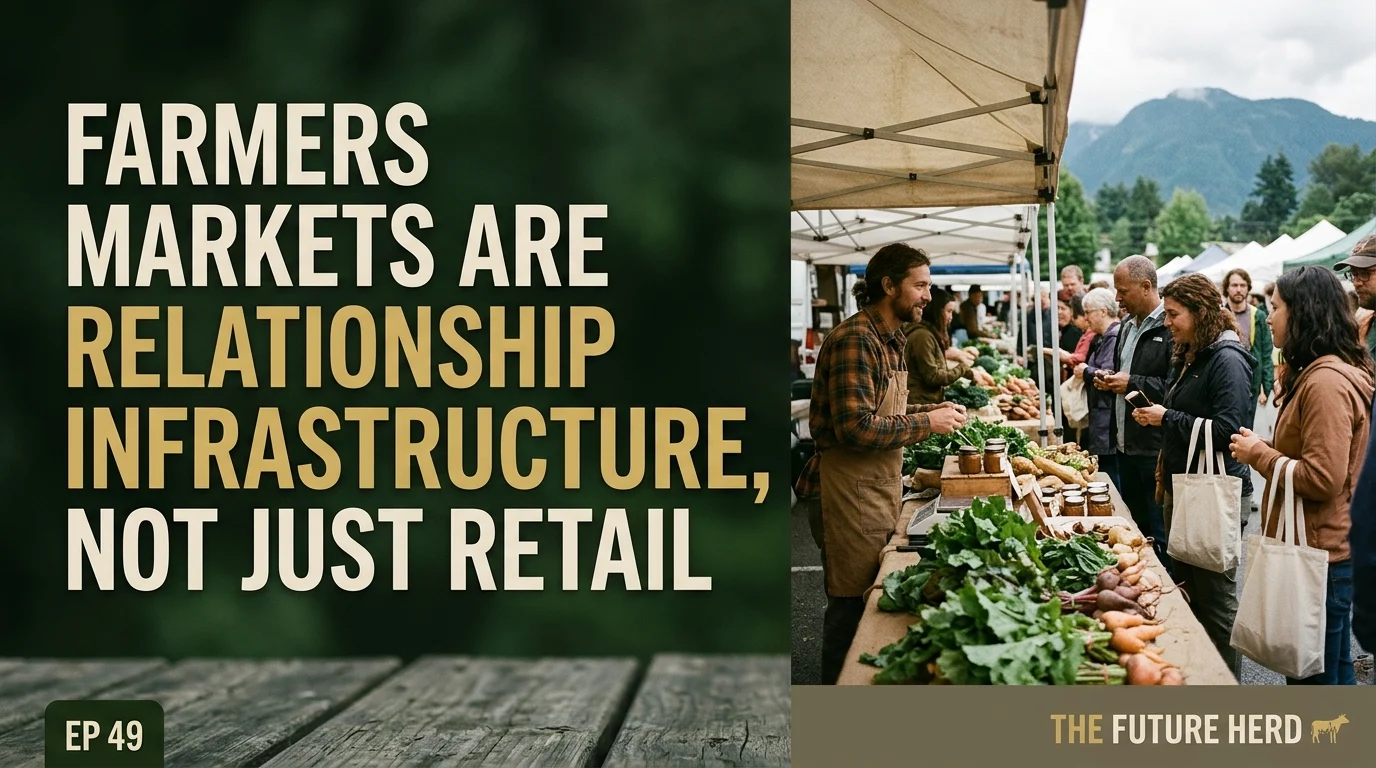
Laura Smit, executive director of Vancouver Farmers Markets, argues that farmers markets deserve recognition as critical civic infrastructure—what she calls relationship infrastructure—rather than temporary retail events. Drawing on her grandfather's greenhouse background and 15 years managing markets like Trout Lake, she shows how markets build trust across urban-rural divides, support new farmers through cooperatives, and bridge food security with fair returns for producers. The conversation explores what it would take for municipalities to plan for markets on a long-term cycle, from truck access and washrooms to cold chain and pricing psychology.
Overview
Laura Smit, executive director of Vancouver Farmers Markets, joins Jesse Hirsh to reframe how we think about farmers markets. She grew up adjacent to her grandfather's greenhouse operation in southern Ontario, stumbled into managing the notorious Trout Lake market in Vancouver, and stayed 15 years. Her central argument: markets are not just retail—they are 'relationship infrastructure' that holds together urban and rural communities, builds trust across political difference, and deserves to be planned for as civic infrastructure rather than treated as a special event that pops up and disappears.
Smit traces the origins of Vancouver Farmers Markets to 1995, when community members in the basement of a Britannia community centre—a dietitian, a professor, moms—recognized food insecurity in East Vancouver and started a market. Farmers stuck around partly because markets paid them when other buyers didn't. That reciprocal relationship—farmers feed the people, people support farmers—has been the organization's foundation for 30 years. But Smit is candid that this informal, grassroots strength has a tradeoff: markets get good at solving problems on the fly, and cities never build the physical infrastructure to match.
The conversation turns to what Smit calls a continuum of infrastructure. Markets can stay scrappy and pop-up, but as they gain traction, municipalities should consider real washrooms, truck and trailer access, shade and tree canopy for climate resilience, cold chain capacity, and shared public spaces that serve markets one day and other community uses the next. She points to Riley Park, where a purpose-built plaza didn't account for transportation ministry loading rules, so farmers have been hopping the curb for a decade—an example of what happens when organizers aren't at the table during design.
Smit leaves listeners with a challenge about perception and pricing: farmers markets are often assumed to be expensive, yet direct comparisons frequently show market produce costing less than grocery stores. She argues the sector needs to apply more pricing psychology without abandoning integrity, and points to the World Farmers Market Coalition, food futurist Mike Lee, and author Harold R. Johnson as sources of inspiration. The episode matters because it makes the case that supporting markets is about building long-term conditions—not just tents—for fair wages for farmers and local food for all.
Key themes
- Farmers markets
- Civic infrastructure
- Local food systems
- Urban-rural connections
- Food security
- Farmer succession