38: How Farm-To-Table Chefs Are Building Rural Community Resilience
Episode 38 · August 15, 2026
Chef-farmer Joel Gray of Down Home Restaurant discusses how integrating small-scale farming, live-fire cooking, and intimate agritourism fosters rural economic development and community resilience. In conversation with Jesse Hirsh, Joel explores how moving beyond toxic restaurant cultures and embracing seasonal, 'perfectly imperfect' ingredients creates a transparent, high-empathy food system.
Overview
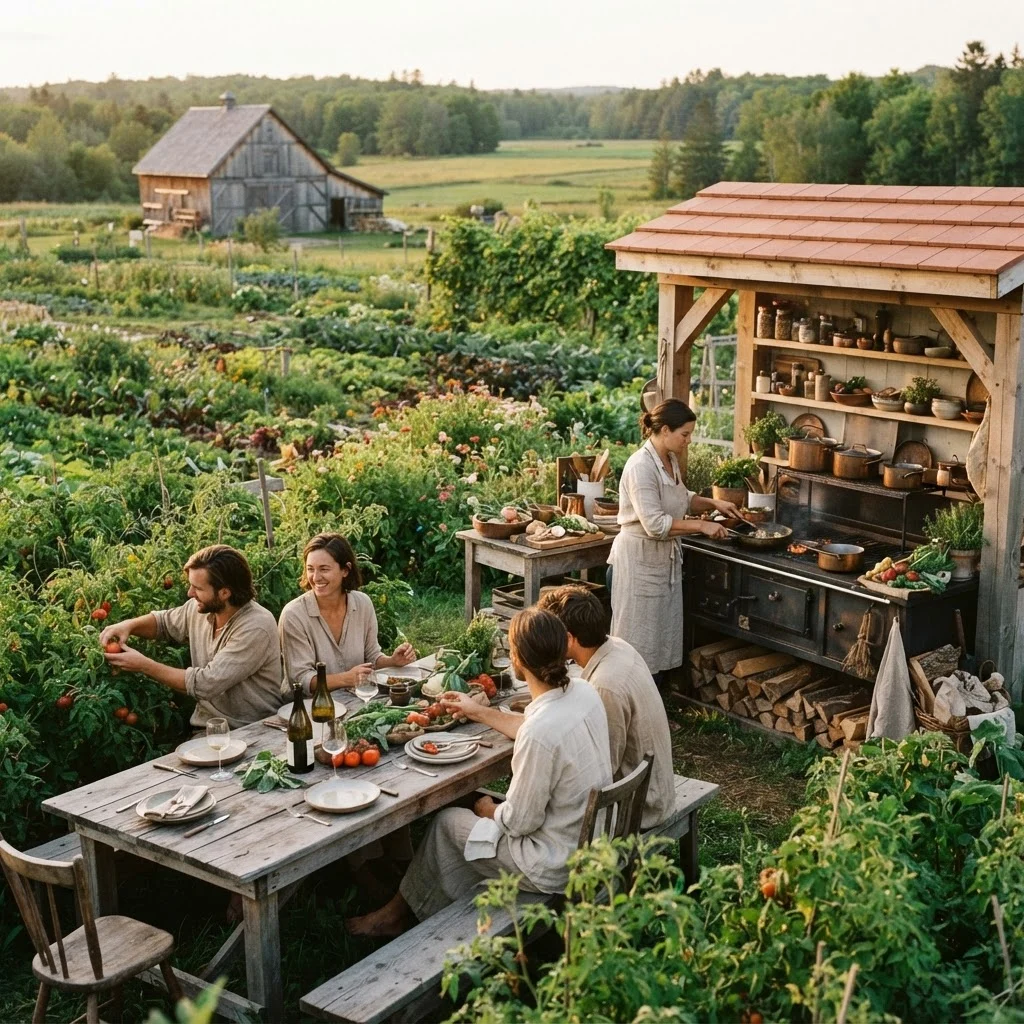
In this episode of The Future Herd, host Jesse Hirsh sits down with chef-farmer Joel Gray, co-founder of Down Home Restaurant in Grey County, Ontario, to explore how grassroots culinary models are reshaping the future of Canadian agri-food. Joel shares his journey from working in urban kitchens sourcing from dozens of small farms to establishing an integrated, 16-seat farmhouse dining experience where agriculture and hospitality merge. The central argument of the conversation is that true rural resilience relies on human-scale infrastructure, direct relationships between growers and eaters, and an economic model that recirculates capital directly back to neighboring small-scale producers.
Throughout the discussion, Joel unpacks the shared psychology of chefs and farmers, noting that both operate under the pressures of perishable goods, unpredictable elements, and an ever-changing economy. By eliminating standard a la carte menus in favor of a curated 'take care of me' dining experience, Joel removes traditional kitchen stress and mirrors the unpredictability of agriculture. This philosophy extends to team building, where he deliberately rejects the toxic burnout tropes popularized in modern media in favor of a sustainable, human-first workplace built on emotional health and shared purpose.
The conversation also tackles the systemic hurdles facing Canada's local food movement, including rigid zoning laws, regulatory bottlenecks around local abattoirs, and a risk-averse agricultural focus on monocultures. Joel argues that restaurants should act as powerful advocacy tools for sustainable food by proving to consumers at the table that ecologically conscious farming produces superior flavour. Rather than relying on industrial food systems driven by fear and bureaucracy, pioneers like Joel and his network of regional collaborators are building decentralized infrastructure, such as on-farm stores and direct-to-consumer supply chains, that empower rural communities.
Listeners will take away a renewed appreciation for the revolutionary power of shared food, as well as practical insights into how small-scale agritourism can drive regional economic development. This episode matters because it offers a tangible blueprint for what a decentralized, ecologically sound Canadian food system looks like in practice, proving that local resilience starts with caring for the soil, the community, and the human beings at both ends of the supply chain.
Key themes
- Agritourism
- Farm-To-Table
- Rural Resilience
- Soil Health
- Culinary Innovation
- Local Food Systems