Strategic Foresight and Operational Agility Define Effective Leadership Amid Global Disruption
Agri-food leaders are finding that maintaining the status quo during prolonged volatility is far riskier than embracing structural discomfort.
Published August 28, 2026
Leadership in the agri-food sector is often framed through the lens of continuity. The traditional archetype of the agricultural leader is one who steady-hands the wheel through predictable seasons, relying on historical benchmarks, established governance models, and proven risk-mitigation strategies. Yet, as global disruptions ranging from climate instability and energy shocks to shifting trade tariffs and geopolitical conflicts compound one another, that traditional playbook is losing its utility. When the baseline conditions of the past no longer govern the present, leaders cannot simply manage toward a foreseeable horizon. They are required to operate within an environment where the future arrives not in decades, but tomorrow.
This tension between legacy frameworks and contemporary volatility creates a profound operational bind. On the ground, producers and industry organizers frequently respond to repeated market stings—such as failed forward contracts during droughts or volatile fish-farming supply chains—by retreating into caution. Risk tolerances that were once expansive contract toward zero. Grain storage capacity is expanded to delay sales; production scales are capped to avoid inventory gluts; public communication is dialed back to evade the vitriol of anonymous online bad actors. This defensiveness is understandable, born of real financial strain and reputational fatigue. However, it collides directly with the urgent demands for food security, value-added processing expansion, and structural innovation. When the front lines of production become paralyzed by risk aversion, broader systemic goals—like national food strategies and economic reconciliation—stall out.
The emerging leadership crisis in agri-food is not merely a numbers game of empty board seats or a lack of willing successors; it is a structural mismatch between how institutions demand participation and how contemporary leaders want to contribute. Traditional governance models built around rigid agendas, marathon four-hour meetings, and rigid travel expectations are ill-suited for a generation balancing intense operational demands with quality-of-life considerations. When organizations insist on maintaining these legacy structures, they encounter a drought of engagement not because young people lack ambition, but because they reject the expectation to absorb institutional burnout as a rite of passage.
Effective leadership in this climate requires a deliberate redesign of the spaces where sector decisions are made. Across various agricultural and aquaculture networks, innovators are beginning to stress-test new approaches to participation. By compressing formal business meetings to their legal necessities and replacing rote updates with open-ended, facilitated peer dialogue, organizations are finding ways to lower the barrier to entry. Some associations are bypassing the geographic and logistical friction of domestic conferences entirely—relocating annual general meetings to all-inclusive settings where members are gathered long enough to move past superficial networking and into genuine, cross-sector problem-solving. These shifts are not cosmetic perks; they are tactical interventions designed to combat the scarcity of attention and the pervasive isolation that characterizes modern food production.
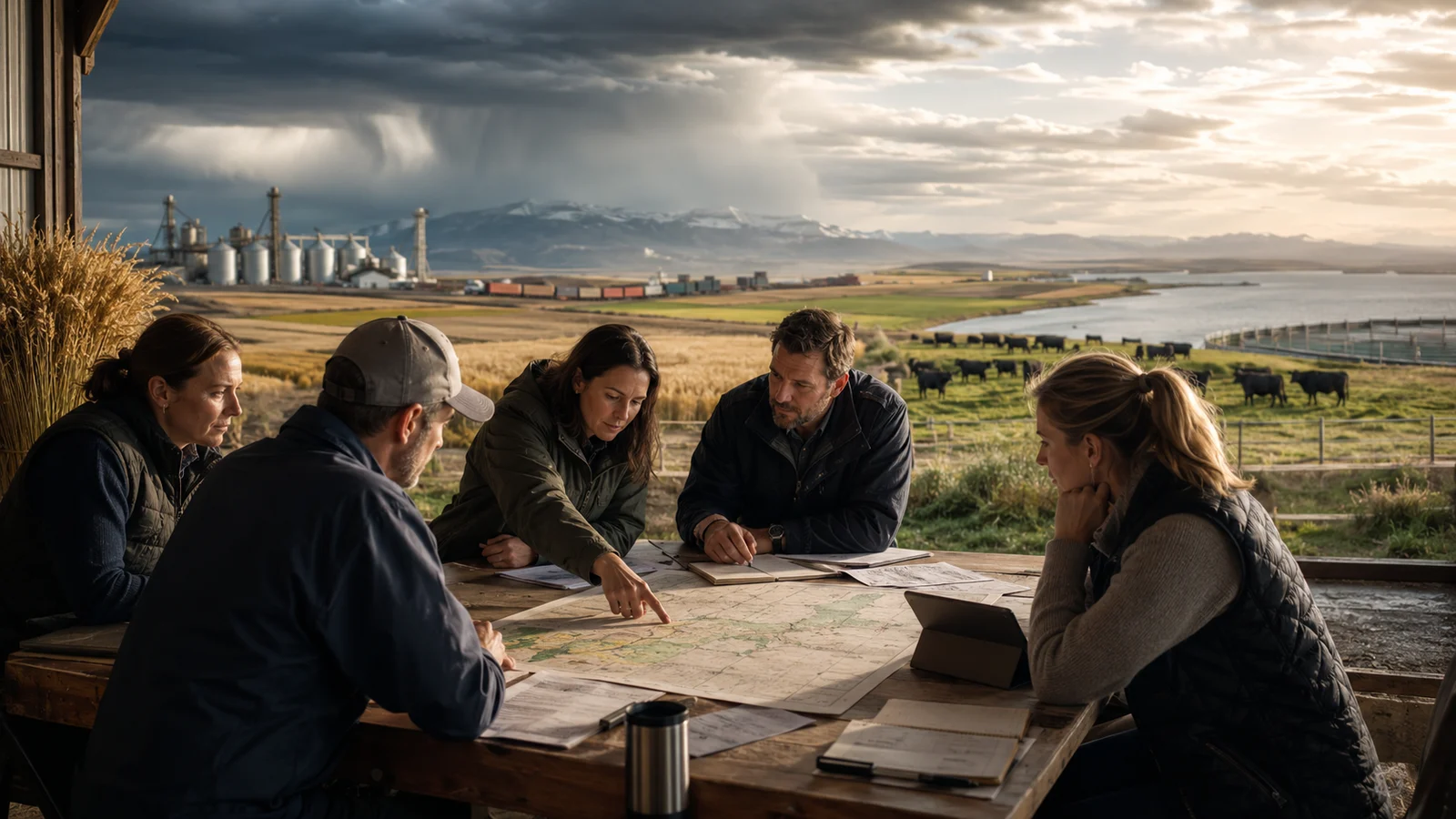
Crucially, this operational agility must be matched by a pivot in how leaders handle strategic foresight. As Tiana notes from a public policy and foresight perspective, relying on historical data to forecast future trends is akin to navigating an unfamiliar landscape with an outdated map. The conditions that generated past trends have fractured. Consequently, effective leaders are abandoning rigid predictions in favor of anticipation—building the organizational muscle to ask "what if" rather than calculating "what was." This means treating disruption not as an anomaly to be weathered until things return to normal, but as the permanent operational environment.
To break free from this paralysis, leaders are realizing that the status quo is no longer a safe harbor; it is the most hazardous choice available. Doing things the way they have always been done leaves operations uniquely vulnerable to modern supply chain pressures and input costs. Overcoming this requires leaders to step out of their silos, embrace structural discomfort, and actively rebuild collaborative bridges across disparate commodity groups. When leaders trade ego-driven protectionism for cross-sector solidarity—recognizing that the resilience of the grain sector, the livestock industry, and aquaculture are mutually constitutive—they transform crisis from a source of overwhelm into a catalyst for institutional renewal.
Related Episode
Themes
- The Risk Burden of Operational Conservatism
- Rethinking Governance and Meeting Architecture
- Strategic Foresight Beyond Past Data
- The Generational Leadership Void