48: The Herd To Harvest Collective Rewrites The CSA
Episode 48 · October 22, 2026
Caylie Corvinelli, a first-generation farmer and veterinary technician, explains how she and her husband launched the Herd to Harvest Collective, which asks eaters to buy a half or whole cow two years in advance and follow the herd through its life. It is a rethinking of the CSA that treats time, transparency and relationship as the product — and that gives a first-generation beef farm the cash flow it needs to survive.
Overview
Caylie Corvinelli farms beef, pork and eggs with her husband on 80 acres in Ontario, and she is the rare first-generation farmer whose path into agriculture came through veterinary technology rather than inheritance. In this episode she explains the central idea behind the Herd to Harvest Collective: that the community-supported agriculture model, which usually asks eaters to buy a season of vegetables upfront, can be stretched over the two-year lifespan of a beef animal. The result is a farm business built on relationship and foresight rather than cheap food and debt.
The collective works by having eaters purchase a half or whole cow two years in advance, then follow the specific animal that will become their beef, with perks like 5% off at the farm store and locked-in 2026 pricing. Corvinelli is candid that the high ticket price means signups are slow — three or four so far — but that even those few commitments have already made a huge difference to a farm facing steep cattle costs. She argues that if the food system is going to change, farmers cannot be the only ones with skin in the game.
Corvinelli describes the farm as regenerative, a label her husband resists, and grounds it in rotational grazing: about 20 cows and 18 calves moved every day to several days, with pastures resting 30 to 60 days so roots deepen, organic matter builds, and dung beetles and grassland birds return. The soil is the basis of all biodiversity, she says. She also credits her veterinary technician background with practical savings — castrating piglets herself, giving injections, avoiding a vet call where possible — while acknowledging she still cannot prescribe and that medicines like meloxicam can cost over $300 a bottle.
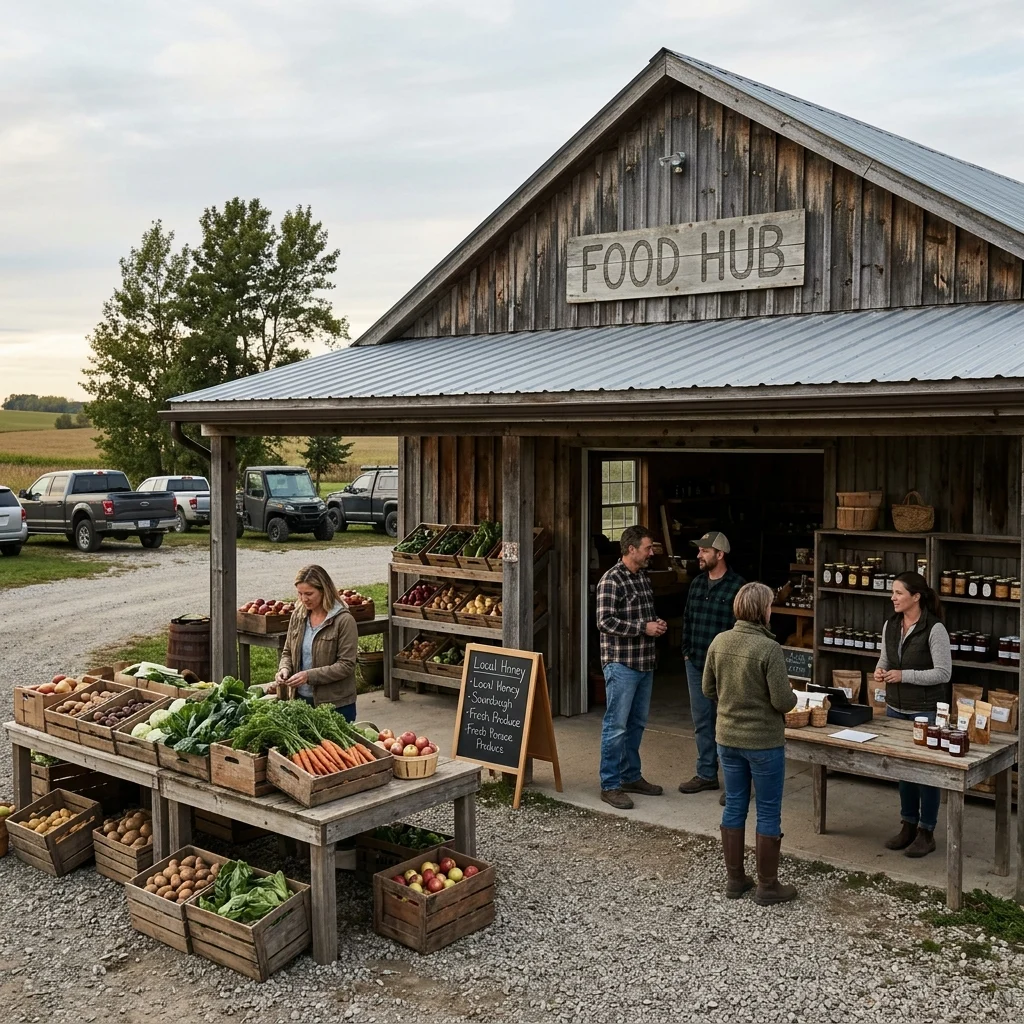
The episode closes on what Corvinelli calls perspective shifts: the realisation after her daughter was born that her own internal voice needed changing, and the advice from a nutritionist friend to stop trying to eat 100% local overnight and instead make 10% changes as often as possible. She argues food is self-care and that the loneliness epidemic and the disconnect from food are the same problem. For Canada's agri-food sector, her farm store and collective point toward a farmer-owned food hub model where local money keeps local families farming.
Key themes
- Regenerative grazing
- Community-supported agriculture
- First-generation farmers
- Local food hubs
- Farm business models
- Veterinary costs